186-1523-0752
 0531-88975421

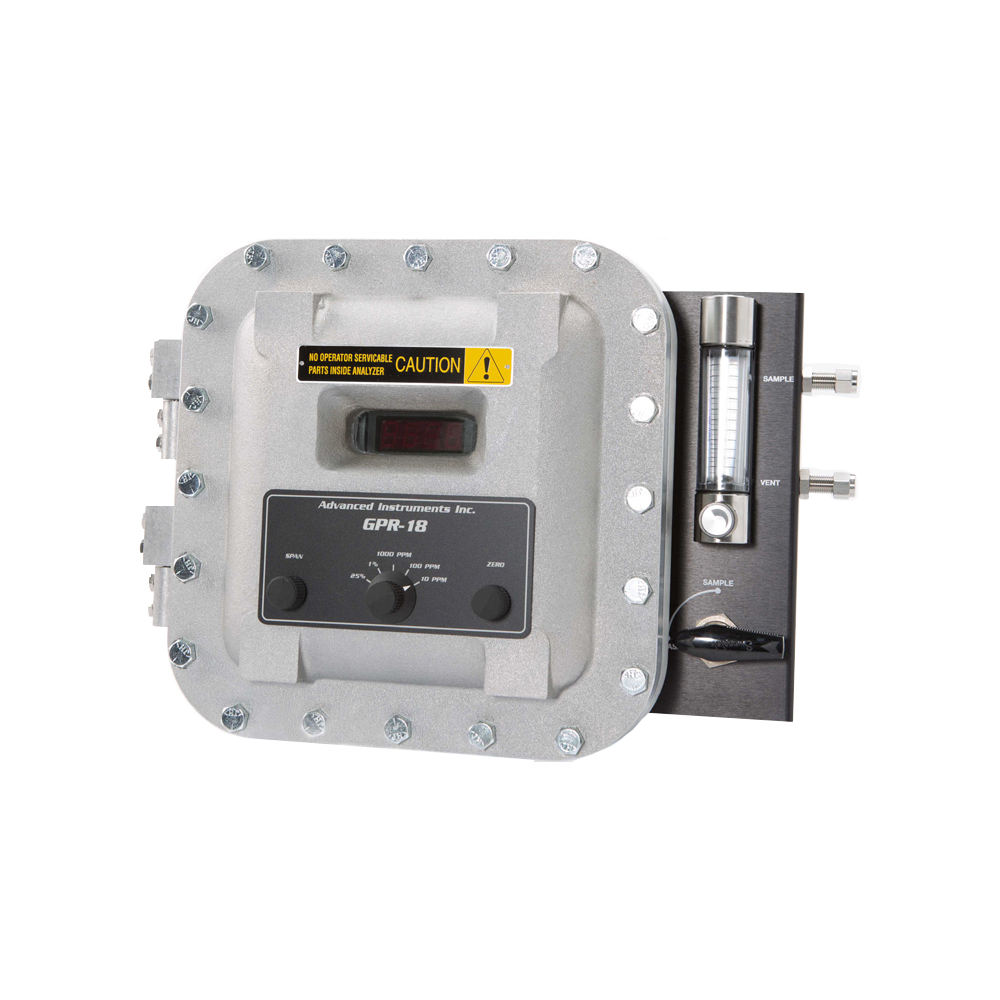
GPR-18&28 Explosion-proof oxygen analyzer
Product Introduction:
Explosion-proof oxygen analyzer for petrochemical industrial processes containing hydrogen and other flammable gases。- Consultation Hotline:18615230752 Landline:0531-88975421
Product Details
Technical parameters
Application scenarios
Optional accessories
Contact Us
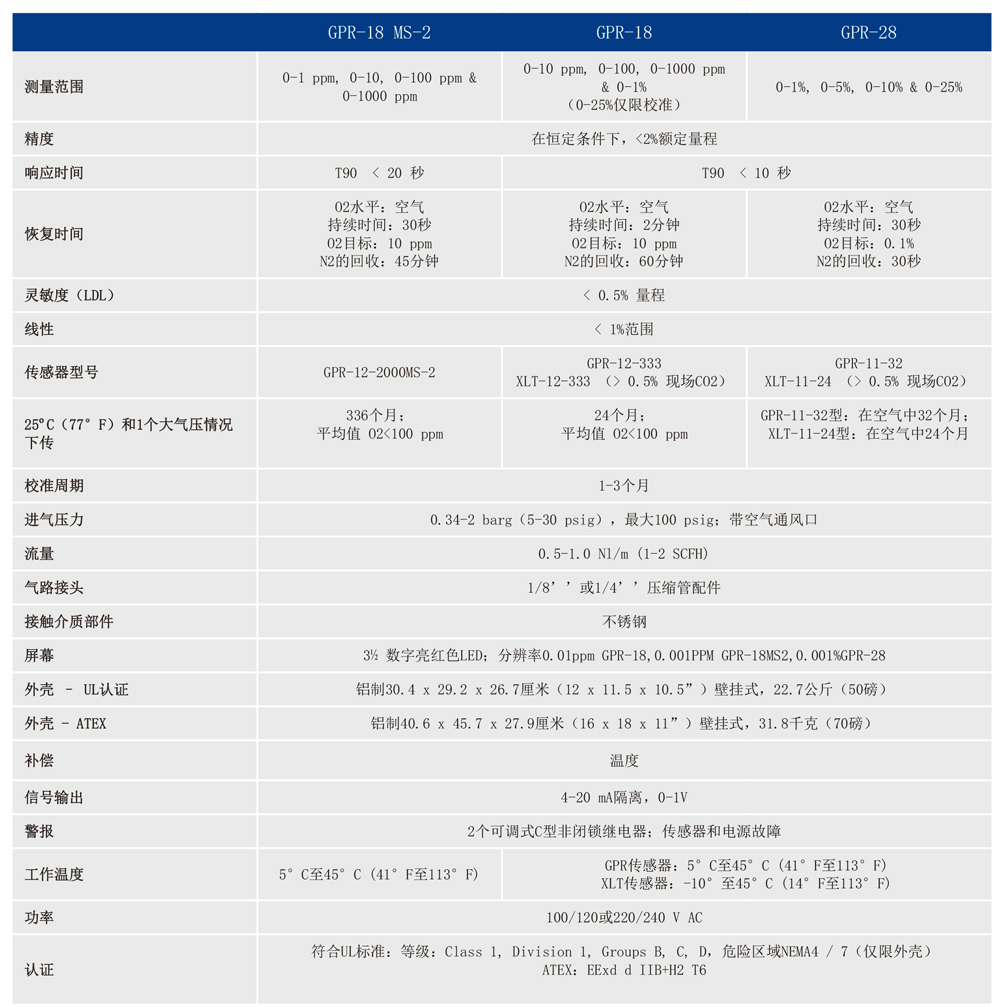
Explosion-proof oxygen analyzer for petrochemical industrial processes containing hydrogen and other flammable gases. This trace and percent oxygen analyzer is installed in a sturdy Exd housing and, when equipped with a flame arrestor, is suitable for hazardous areas. The proven electrochemical sensor has reliable oxygen sensitivity and can measure oxygen in the range from as low as 0-1 ppm to 0-25%.
GPR-18 (ATEX)
For most trace hydrogen measurements, the GPR-18 oxygen analyzer is undoubtedly the best choice. This oxygen analyzer has an LDL (Lower Detection Limit) of 500 ppb O2, can be calibrated with air, and is suitable for most locations. For measurements with higher carbon dioxide concentrations, the XLT sensor can be used. There are two enclosure options available: UL certified or ATEX certified.
Optional ranges: 0-10, 0-100, 0-1000 ppm and 0-1% O2.
(0-25% range is for calibration only.)
GPR-18 MS-2 (ATEX)
When most measurements are below 1 ppm O2, the GPR-1800MS oxygen analyzer should be chosen. The GPR-1800 is a proven analyzer and can be equipped with UL-certified or ATEX-certified enclosures, with the same functions and options.
Optional ranges: 0-1, 0-10, 0-100, and 0-1,000 ppm O2.
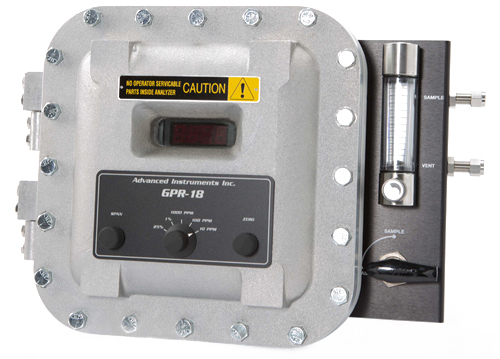
Model:UL Class 1 Division 1
GPR-28(ATEX)
To measure the oxygen percentage, a GPR-28 analyzer should be selected. This oxygen analyzer has an LDL of 500 ppb O2 and can be calibrated with air. For measuring higher concentrations of carbon dioxide, an XLT sensor can be used.
Optional ranges: 0-1, 0-5, 0-10, and 0-25% O2.
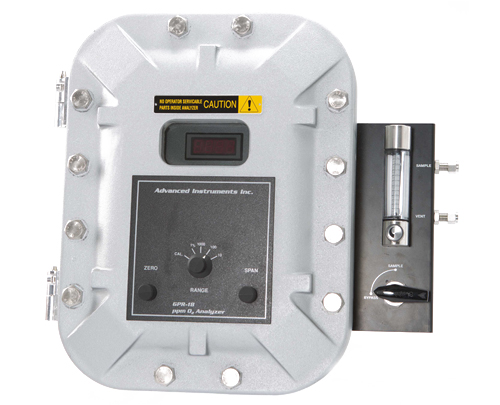
Models suitable for ATEX II 2 G
Highlight:
High-quality current sensor technology
Sensor lifespan of 24 to 36 months, low maintenance cost
No frequent electrolyte replenishment required
Good stability
Accuracy: ±2% of rated range
Sensitivity: <0.5% of range
4 standard measurement ranges
Equipped with flame arrester (standard)